
Our History
Our History
A Western Suburbs Water Polo Club Since 1948
Dolphins Water Polo Club was established in 1948 and is one of Perth’s longest-running water polo clubs.
For more than 75 years, Dolphins has been part of the development of water polo in Western Australia, providing generations of players with the opportunity to learn the game, compete, form lifelong friendships and progress from junior water polo through to state, national and international competition.
The Club’s history is closely connected with Perth’s western suburbs and, in particular, the waters and swimming facilities around Crawley and Claremont.
The Early Years – Crawley Baths
Before modern aquatic centres became commonplace in Perth, water polo was played and trained in very different surroundings.
Former Dolphins player Bill Woodhouse recalled learning to swim and training for water polo with Dolphins at the historic Crawley Baths on the Swan River. Crawley Baths was an important swimming and water polo venue in Perth before the opening of Beatty Park in 1962.
These early years helped establish the competitive and community foundations of Dolphins.
By the 1950s and 1960s, Dolphins had developed a strong senior and junior water polo program and was producing players who would progress to the highest levels of the sport.

An Early Generation of Champions
A number of significant figures in Western Australian water polo were connected with Dolphins during the Club’s early decades.
Frank Sturgeon was one of the Club’s most influential early members. A long-serving Dolphins stalwart and an enthusiastic supporter of junior development, Frank became a Dolphins Life Member in 1960. His contribution extended well beyond the Club, and he was later made a Life Member of Water Polo Western Australia in 1973.
Dolphins also played an important role in the development of several Australian Olympians.
Allan Charleston was associated with Dolphins as both a player and coach and represented Australia at the 1960 Rome Olympic Games.
Stan Hammond played for Dolphins from the 1950s and became a Club Life Member. He represented Australia at the 1964 Tokyo Olympic Games and was part of Dolphins premiership-winning teams in 1963–64, 1966 and 1970. Hammond later became an important coach and administrator within Western Australian water polo.
Historical records also identify Graeme Samuel, another member of Australia's 1964 Olympic water polo team, among the Olympians developed through Dolphins during this period.
Together, these players formed part of an important generation that helped establish both Dolphins and Western Australia within Australian water polo.
Claremont Becomes Home
A major chapter in the Dolphins story began in 1971.
Town of Claremont records confirm that Dolphins has operated from the Claremont Aquatic Centre since 1971, conducting water polo training, competition and Club activities at the venue.
Claremont would become much more than simply a place to train. Over the following decades it became the Club’s home and a central part of the Dolphins identity.
Generations of Dolphins players have since grown up around Claremont Pool — beginning as young players, progressing through junior competition and senior water polo, and in many cases returning later as coaches, officials, volunteers, Masters players and parents of the next generation.
Dolphins has also had a broader influence on the development of water polo throughout Perth’s western suburbs. Former Dolphins juniors were involved in the establishment of other clubs during the 1970s, further extending the impact of the Club's early development programs on the growth of the sport in Western Australia.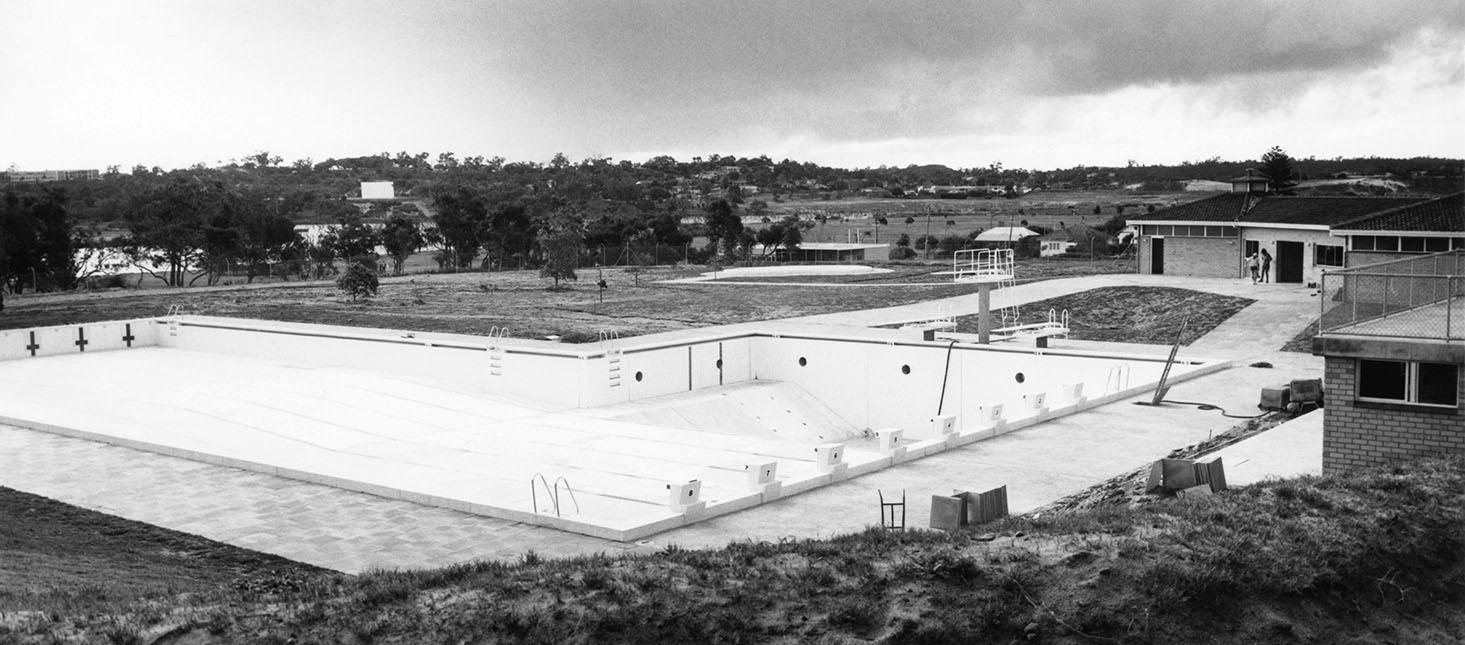
Developing Australian Players
The tradition of developing high-level players continued through later generations.
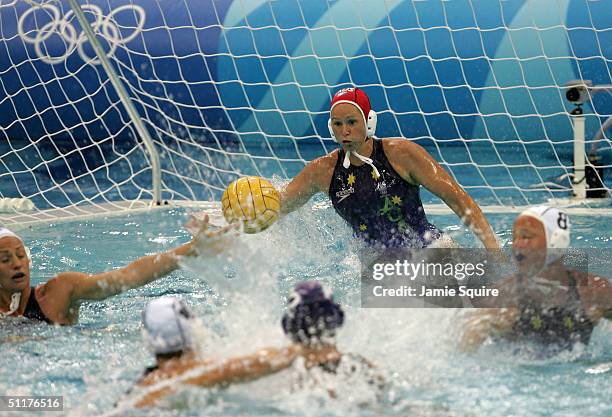
Olympic goalkeeper Emma Knox first played water polo at the age of 12 with the Claremont Dolphins. She went on to represent Australia internationally, compete at the 2004 Athens Olympic Games, and win an Olympic bronze medal with the Australian Stingers at Beijing 2008.
Western Australian George Ford also began his water polo journey with Claremont Dolphins. He progressed through the Australian pathway to represent the Sharks internationally and competed at both the 2016 Rio and Tokyo 2020 Olympic Games.
Across different eras, many other Dolphins players have represented Western Australia, been selected in Australian age-group programs and competed at national championships.
That pathway — from a young player learning the sport in Claremont to competing at state, national or international level — remains an important part of the Dolphins tradition.
More Than Elite Competition
While Dolphins is proud of the champions who have emerged from the Club, its history has never been defined only by elite results.
At its heart, Dolphins has always been a community club.
Thousands of children, adults, families, coaches, referees, committee members and volunteers have contributed to the Club over the decades. Some players have gone on to represent Australia; many others have simply enjoyed playing water polo with their friends and remaining connected with the sport throughout their lives.
That combination of participation, development and competition has allowed Dolphins to remain relevant across generations.
Dolphins Today
Today, Dolphins remains firmly based in Perth's western suburbs, training and playing at Claremont Aquatic Centre and the MLC/CCGS Aquatic Centre.
The Club serves Claremont, Nedlands, Cottesloe and surrounding communities and has approximately 500 members.
Our programs now provide a pathway from a child's first experience of water polo through to junior competition, senior water polo, Masters and social competition.
Although the facilities, competitions and game itself have changed enormously since 1948, the purpose of Dolphins remains remarkably similar: provide people with the opportunity to belong to a club, develop their skills, compete to the best of their ability and contribute to the water polo community.
Continuing the Story
From the early days of training in the Swan River at Crawley, through the Club's arrival at Claremont in 1971, to today's junior, senior, Masters and social programs, Dolphins has been part of Western Australian water polo for more than three-quarters of a century.
Our history has been built by generations of players, coaches, officials, volunteers and families.
And that history is still being written.
Established 1948. Proudly based in Perth's western suburbs.
One Club. Generations of Dolphins.
Sponsors


